Short Term Rental Switzerland: Rules by Canton
By Clément · Co-founder of Lyvo, product and technology
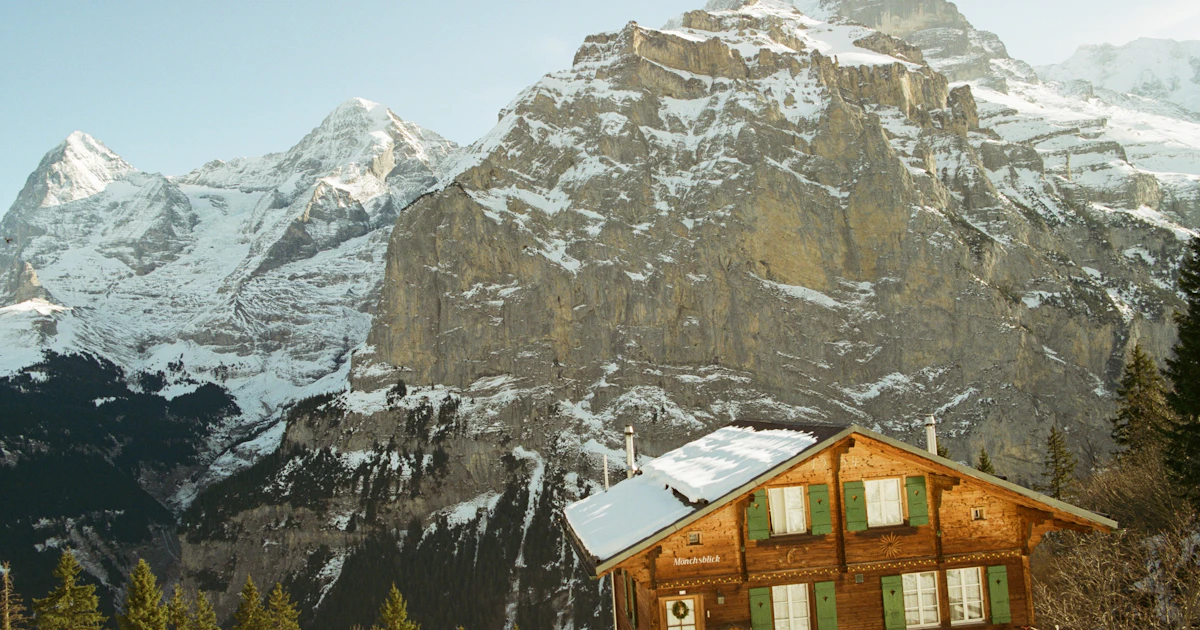
Short term rental in Switzerland is legal everywhere, but no two cantons apply the same limits. Geneva and Vaud cap an apartment at 90 nights per year without a permit, Valais regulates through second-home status rather than night counts, and Zurich has just tightened its zoning rules. Every rule you need sits on one of three levels: federal, cantonal, communal.
Here is what each level requires, canton by canton, followed by the obligations that apply at any Swiss address: tourist tax, foreign guest registration, VAT and income tax.
Short term rental in Switzerland: what federal law actually covers
There is no federal short term rental act. The Confederation sets only three guardrails, and they apply to every host in the country.
The first is tenancy law. If you rent your home, subletting requires your landlord’s consent, and the rent you charge cannot be abusive compared with what you pay. Subletting without consent can cost you the lease and the profits you made.
The second is the Second Homes Act, known as Lex Weber, which caps second homes at 20 % of a municipality’s housing stock. It does not govern renting as such, it governs what the dwelling is legally for, and that distinction matters enormously in ski resorts.
The third is the duty to register foreign guests, set out in article 16 of the Foreign Nationals and Integration Act. Anyone accommodating a foreign national for payment must report them to the cantonal authority, whether they do it once a year or every week.
Everything else, meaning night caps, permits and taxes, is decided by cantons and municipalities.
Geneva: the LDTR rule and the 90-night ceiling
Geneva runs the strictest regime in the country. Article 4A of the implementing regulation to the LDTR housing act treats renting out a whole apartment through a platform for more than 90 days a year as a change of use, which requires a permit.
Past that threshold, regular and continuous hosting is reclassified as a commercial activity and falls under the cantonal trade police. In subsidised housing under the LGL, LDTR or LUP schemes, short term subletting is banned outright, and doing it anyway can terminate the lease with immediate effect.
Airbnb has collected the tourist tax on behalf of Geneva hosts since September 2020, and foreign guests must be reported to the cantonal police. The canton is also preparing a register of short term rentals so that the 90-day ceiling becomes enforceable rather than declarative. The full regime is published on the official State of Geneva portal.

Vaud: municipal registration and permits beyond 90 days
In canton Vaud, hosts must first register with their municipality under the cantonal economic activities act. A tenant who wants to list a home needs written landlord approval, and the landlord has 30 days to answer under article 22 of the cantonal tenancy rules.
In districts facing a housing shortage, renting for more than 90 days a year requires a municipal change-of-use permit. Three situations are exempt: owner-occupied homes, buildings with no more than two dwellings, and homes of 150 m² or larger.
Municipalities levy the tourist tax, with a collection agreement negotiated between the association of Vaud municipalities and Airbnb. The canton also tracks platform activity every quarter using public InsideAirbnb data, which it shares with municipalities: your own declaration is no longer the only thing your municipality can look at.
Valais: second homes and resort municipalities
Valais sets no night cap at all. What counts here is what the property is zoned for. In municipalities above the 20 % second-home threshold, construction of new conventional second homes has been frozen since 2013, with Crans-Montana the best known case.
In practice, a dwelling built or authorised before the Lex Weber vote in 2012 keeps its grandfathered status and can be rented short term without restriction. A newer unit may carry a tourist-use designation that obliges you to actually rent it out, a covenant worth checking in the land register before buying in a resort.
Tourist tax is set municipality by municipality and revised regularly. Crans-Montana raised it from 3 to 5 francs per person per night on 1 May 2025, with a duty to declare overnight stays. Verbier and Zermatt use their own rates and reporting channels: the answer is always in the municipal regulation, never in a single cantonal schedule.
Zurich: lighter on paper, tighter since 2026
Zurich imposes no general night cap, but the city has tightened the screws through planning law instead. On 30 April 2026 the Federal Supreme Court dismissed the appeals against the partial revision of the building and zoning ordinance: temporarily rented dwellings, whether Airbnb listings or business apartments, no longer count toward the minimum residential quota required in a building.
For owners, that means declaring the intended use when applying for a building permit and requesting authorisation for a change of use, even with no construction work involved. The rules are due to take effect in autumn 2026. Occasionally renting your own home while you are away is explicitly out of scope.
In parallel, a popular initiative filed by the Social Democrats, the Greens and the Alternative List asks for a 90-day annual cap. The city has declared it valid, so the Zurich framework is still moving and deserves a fresh check before any buy-to-let decision.
Tourist tax and guest registration: the rules that follow you everywhere
Two obligations apply regardless of canton.
Tourist tax is owed by the guest but collected and remitted by the host, unless the platform has an automatic collection agreement in place. Those agreements cover Geneva and part of the Vaud municipalities, not the whole country, and they never remove your duty to declare overnight stays or to handle direct bookings yourself.
Foreign guest registration cannot be delegated at all. You need the identity details of every adult guest, transmitted through the form and channel your canton uses. Article 16 of the Foreign Nationals and Integration Act sets the federal baseline, and cantons may tighten it further.
In practice this belongs at booking time rather than at the front door. That is the job of automating check-in for a short term rental: you receive the ID details before the guest arrives, and the stay starts without paperwork.
VAT, income tax and when hosting becomes a business
Short term rental income is taxable as ordinary income and goes into your regular tax return. That holds whether you rent ten nights or a hundred.
VAT works on a threshold: registration becomes mandatory above 100,000 francs of annual turnover. Accommodation services benefit from a special rate of 3.8 %, well below the standard 8.1 % rate. Parliament renews that special rate periodically, and the current version runs to the end of 2027. Current rates are published by the Federal Tax Administration.
Volume also changes your regulatory status, not just your tax bill. Several cantons reclassify hosting as a commercial operation past a certain rhythm, with the trade permits that come with it. A host renting a flat a few weeks a year and a property manager running 40 units are not in the same regime, even on the same street.
A compliance checklist before your first booking
Work back up the pyramid, in this order:
- Confirm your right to rent: owner, tenant with written landlord consent, or co-owner bound by the condominium rules.
- Read the municipal regulation. It sets registration, tourist tax and, in shortage areas, the change-of-use permit.
- Count your nights. A counter kept from the first booking beats discovering in December that you crossed 90 days in October.
- Set up foreign guest registration: identity captured at booking, transmitted through your cantonal channel.
- Track your turnover. The 100,000-franc VAT threshold is assessed over a rolling twelve months, across all your properties.
- Brief your guests. Building rules, quiet hours, waste sorting: quiet neighbours spare you the complaint that triggers a municipal inspection.
The last point digitises easily. An Airbnb welcome book gathers local rules, arrival instructions and recommendations into one link guests open on their phone, with nothing to install. With Lyvo, AI drafts the sections and the book is ready in under ten minutes, in each guest’s own language, which also settles the German, French and English question that comes with hosting in Switzerland.
The same page can carry your paid services: extra cleaning, station transfer, ski locker, local produce basket. In a Valais resort, those add-ons bring in revenue when the calendar empties between seasons.
FAQ
How many nights can you rent a home on Airbnb in Geneva?
Ninety days a year at most when renting out a whole dwelling. Beyond that, the LDTR implementing regulation treats it as a change of use, which requires a cantonal permit and, for regular hosting, registration with the trade police.
Do you need a permit for short term rental in Switzerland?
Not at federal level. It depends on canton, municipality and volume: a permit is required in Geneva and in Vaud shortage areas beyond 90 days a year, and in Zurich for a change of use of a temporarily rented dwelling.
Who pays the tourist tax in Switzerland, the host or the guest?
The guest pays it, the host collects it and remits it to the municipality. In Geneva and several Vaud municipalities, Airbnb charges it at booking. Direct bookings remain the host’s responsibility to declare.
Can a tenant sublet an apartment short term in Switzerland?
Yes, with the landlord’s consent and at a rent that is not abusive. In canton Vaud the landlord has 30 days to reply. In Geneva’s subsidised housing, short term subletting is prohibited with no exceptions.
Does Airbnb report my income to the Swiss tax authorities?
The platform does not file your return for you. Rental income stays declarable as ordinary income, and 100,000 francs of turnover triggers VAT registration, at the 3.8 % special rate for accommodation.
Staying compliant without losing your evenings
Compliance in Switzerland comes down to a handful of things: the right municipal regulation, a night counter, clean identity collection and guests who know the rules. The last three automate well.
To see what a fully digital arrival looks like, from guest details to selling services during the stay, explore the Lyvo solutions or compare plans and pricing.